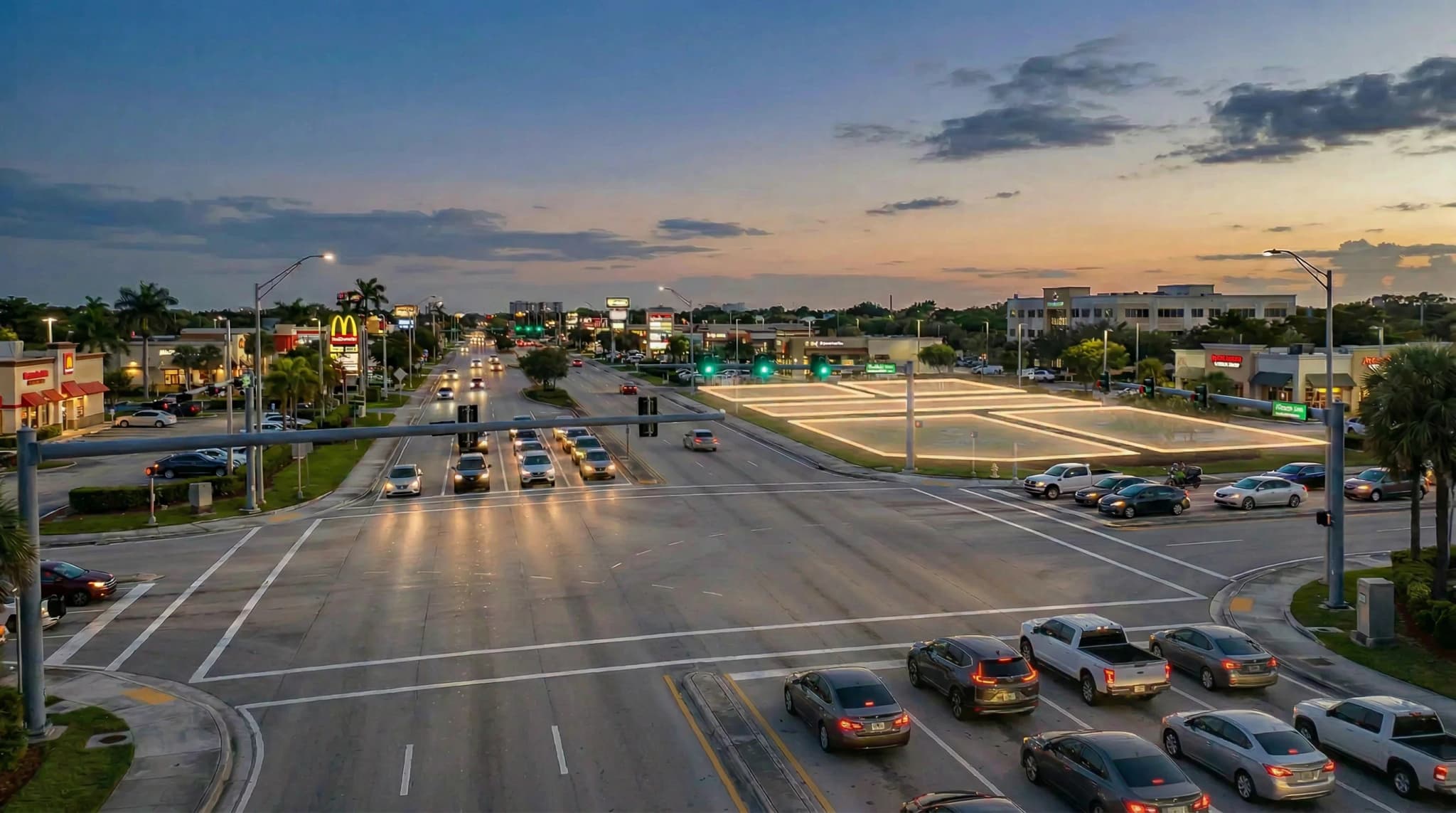
This is the inside story of how we built Oceanir. In the beginning, it was mostly noise: unstable outputs, false positives, and systems that looked good in demos but failed in real city conditions.
We kept iterating until the signal became obvious. The result was a privacy-first geo-estimation workflow that could move from prototype to live operations without losing speed or reliability.
The noise
The first versions were rough. We saw poor consistency between neighborhoods, high latency in dense zones, and fragile behavior when scenes had heavy foreground clutter.
Those failures became the roadmap. We stopped optimizing for screenshots and focused on hard reliability under real-world inputs.
Development timeline
The signal
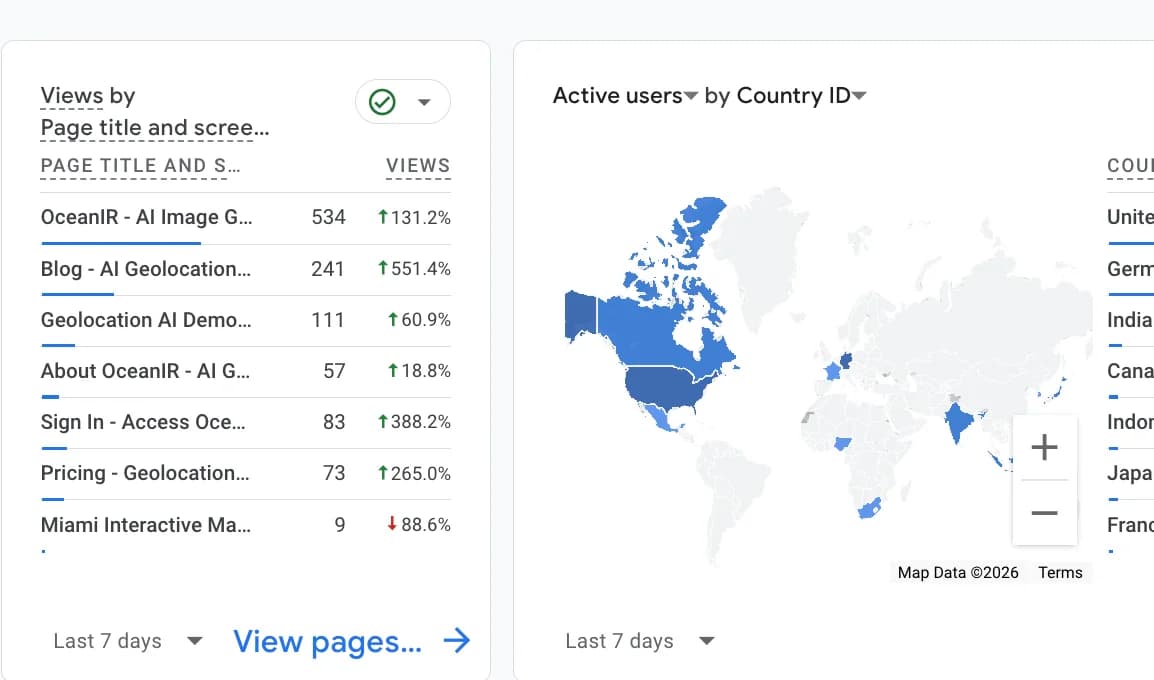
The breakthrough was not one model update. It was system-level discipline: better data hygiene, clearer evaluation criteria, and tight feedback loops from field usage.
That shift turned scattered progress into repeatable performance. From there, the platform became stable enough to scale.
"We didn't just build a model. We built a system that could hold up under operational pressure."
- Engineering log, 2025
Next steps
Explore the live product and see how the system performs with your own image inputs.
Launch Demo→